Part One ended on the £2 a head they actually admit to. This is the bit they’re sitting on, and it’s land, property and income on a scale most families simply can’t fathom. I wanted to know what comes with the titles and the job.
Some of the wealth belongs to the Crown, some comes with a royal title, and some is the family’s own. Mix those up and you get a misleading picture, which happens quite a lot. Keep them apart and the arrangement gets easier to see. The income follows hereditary titles, and the only qualification for getting it is being born into the right family.
Luckily, the accounts are published, so I went and had a read.
Who Owns What? Following the Assets
There are two different numbers here that often get muddled up. One is what an estate is worth, the other is what a royal actually gets from it each year. Who owns it matters just as much. The Crown Estate goes with the institution. The two Duchies pay an income to whoever holds a particular title. Balmoral and Sandringham are private property, and the Royal Collection is held in trust.
Lump them all together as the King’s wealth and the total looks impressive but is wrong, so I’ve taken them one at a time.
The Crown Estate: £16.7 billion
This is commercial property, farmland and rights over the seabed, including the sites for offshore wind farms. Its accounts for the year to March 2026 put its net assets, roughly what it owns minus what it owes, at £16.7 billion. It handed £487 million of profit to the Treasury. [1]
None of that is the King’s money, as Part One explained. He can’t sell the Estate, and private estates like Balmoral are a different thing in law. [2] Some of it has been home to his family, though, and I’ll come back to that.
The Duchy of Lancaster: nearly £690 million
The Duchy of Lancaster consists of vast amounts of farmland, commercial property and investments held for whoever is monarch. Its income goes directly into the Privy Purse, the King’s own account, which pays for both official and private spending. [3]
It goes back to 1265, when Henry III gave his son Edmund the lands of Simon de Montfort, the rebel baron killed fighting the King that same summer. [4] Earlier that year, de Montfort had called a Parliament that, for the first time, summoned representatives of the towns alongside those of the shires, the earliest forerunner of the Parliament we have today. [5] So the King’s private income starts, quite literally, with land taken from the man whose Parliament first gave the towns a voice.
Its rural land alone comes to nearly 42,000 acres across England and Wales, spread over five estates. That’s nearly 170 square kilometres, more than twice the size of the city of Leicester, and it doesn’t include the Duchy’s town property, its stretches of shoreline or its rights to the minerals under the ground. [6] [7]
For the year to March 2026, the Duchy reported net assets of nearly £690 million. [8] Its surplus, the profit that goes to the Privy Purse, was more than £25 million. [9]
The King can’t touch the capital, because the estate is kept for future monarchs. [10] What he gets is the income, every year he’s on the throne, without having bought the land or competed for any of it.
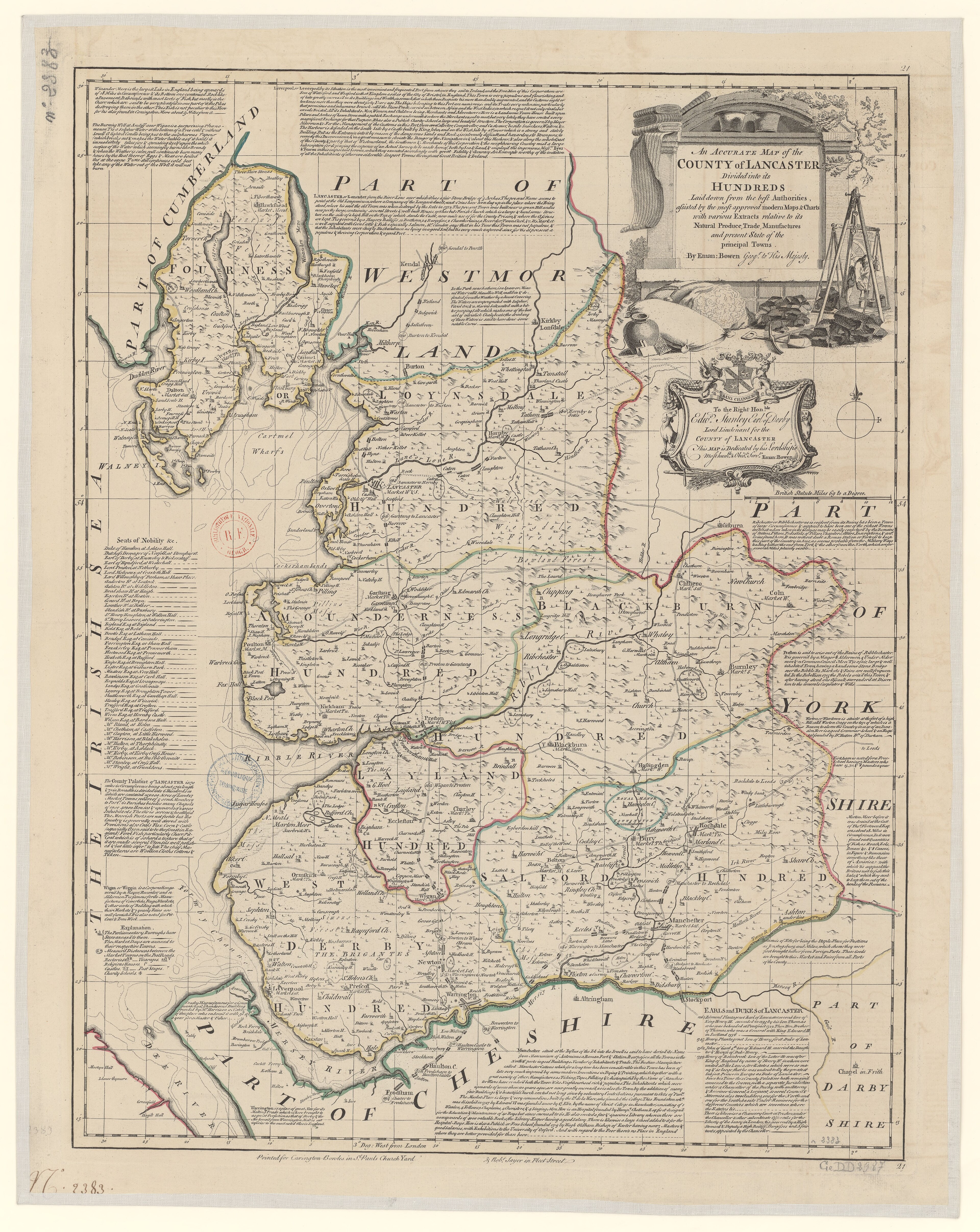
Here’s the county the Duchy takes its name from, in Emanuel Bowen’s map of 1755. Its land today reaches well beyond it.

The Duchy of Cornwall: about £1.2 billion
Prince William has the same kind of arrangement as Duke of Cornwall. This one goes back to 1337, when Edward III carved it out of the old Earldom of Cornwall for his son and heir, who was about seven. The founding charter set a rule that still stands. The Duke of Cornwall is always the monarch’s eldest son and heir. [11] [12] William didn’t apply for it. He was born first.
His Duchy had about £1.2 billion of net assets in March 2026. [9] Its distributable surplus, the profit it can pay out to him, came to nearly £22 million for the year. [13]
That’s three times the land of the King’s Duchy. The Royal Household puts it at about 128,000 acres across 19 counties. [9]
That’s nearly 520 square kilometres, more than the whole Isle of Wight at about 380, though it’s spread in pieces across the country. [14]
Most of the Duchy of Cornwall isn’t in Cornwall. The Duchy says only about 13% of its land is in Cornwall. The rest is farms, housing and commercial land across England and Wales. [12]
As with Lancaster, the capital has to be kept for future Dukes of Cornwall, so William gets the income but can’t sell the estate and take the money. [12]
Put the two Duchies together and you get more than 170,000 acres, nearly 690 square kilometres. That’s just over 1.8 times the Isle of Wight, and it still leaves out Lancaster’s town property and both estates’ wider businesses. [6] [9] [14]
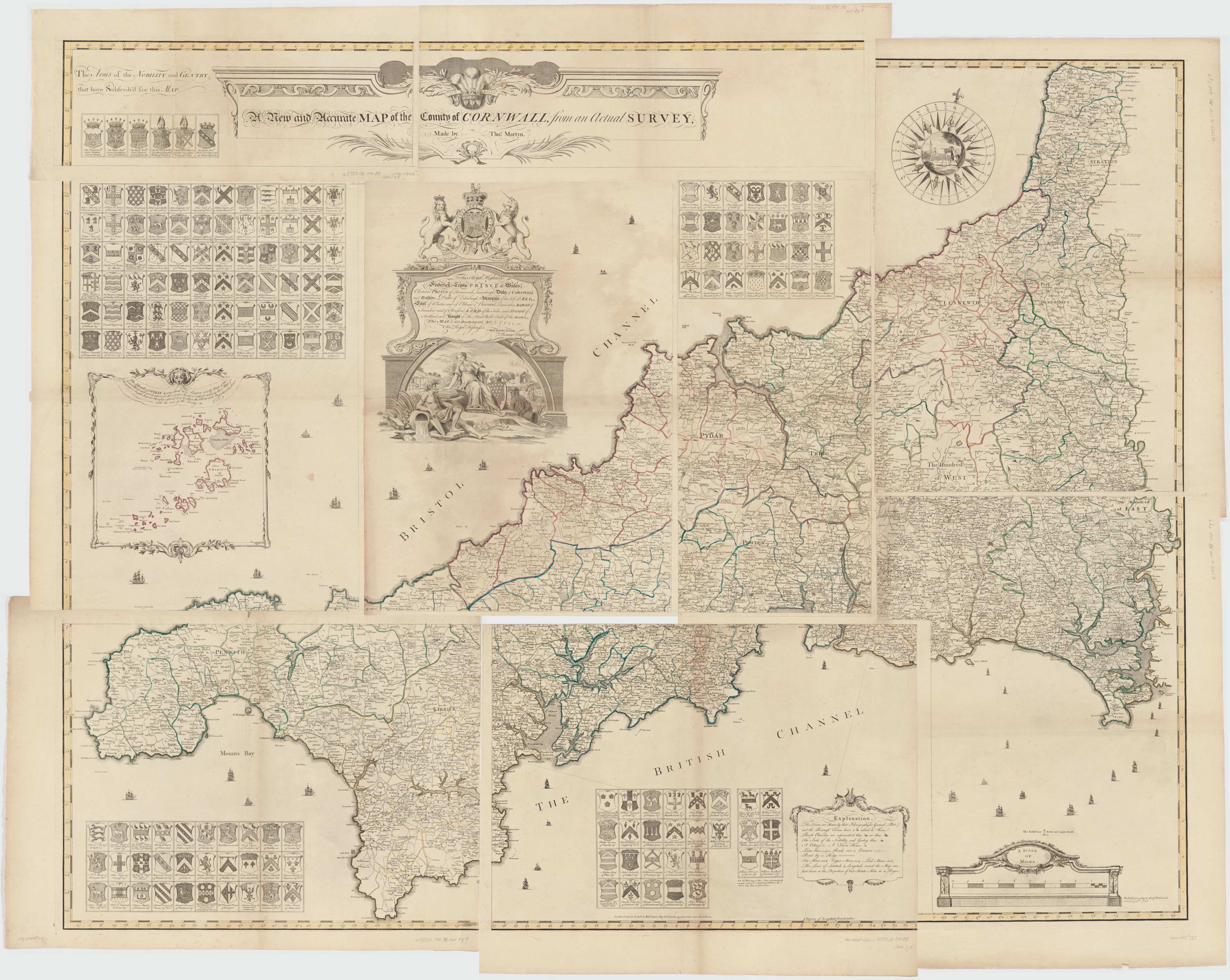
And here’s Cornwall, in Thomas Martyn’s map of 1748. Most of the Duchy’s land is somewhere else entirely.

Who pays the Duchies?
Some of the Duchies’ customers are public bodies, which means some of their income starts out as public money.
In late 2024 and early 2025, the Sunday Times and Channel 4’s Dispatches went through the Duchies’ leases. [15] Two of their findings are astonishing:
- The Duchy of Cornwall’s lease of Dartmoor Prison to the Ministry of Justice was worth about £37.5 million over 25 years, and the prison was standing empty. [16]
- Guy’s and St Thomas’ NHS Trust agreed to pay the Duchy of Lancaster about £11.4 million over 15 years to keep electric ambulances in one of its warehouses. [15]
An NHS trust, paying the King’s estate to park its ambulances. I had to read that one twice.
The list went on. The Navy paid the Duchy of Cornwall for jetties and moorings, local state schools held leases from it, and the Duchy of Lancaster stood to earn millions from offshore wind farms through an old right to charge for cables crossing its land. [15]
Both Duchies said they run as commercial estates and comply with the law, and the Duchy of Cornwall pointed to its work on housing, homelessness and the environment. Buckingham Palace declined to comment. [15]
Dartmoor has moved on twice since, and both times after the Sunday Times and Dispatches had put the lease in the headlines. In June 2026 the Duchy said the £1.5 million a year it gets for the closed prison would go to support Princetown, the village next to it. [13] In September William launched a community fund there of at least £250,000, and asked for the rent to be taken out of his income from 2026/27. [17]
None of this was illegal, and the Duchy says so. But legal isn’t the same as right. Charging the Ministry of Justice £1.5 million a year for an empty prison was perfectly lawful, and the rent was only redirected after it had been on television. Keep that in mind. “It was legal at the time” is the argument you hear whenever Britain’s history with slavery comes up.
That’s good news for Princetown. But a fund of at least £250,000 is a sixth of one year’s rent, and I couldn’t find anything saying how the rest will be spent. I’ll be watching.
None of this shows up in Part One’s ledger of public costs, because officially it’s just rent. But when the tenant is the NHS, the Navy or the Ministry of Justice, it’s public money all the same, and the Duchies’ profits go to the King or the Duke of Cornwall.
Where the royals live, and who pays the rent
In June 2026 the National Audit Office, the body that checks how public money is spent, published a review of the homes royals rent from the Crown Estate and the Royal Household. It left out the Duchies, Balmoral and Sandringham, so some of the grandest royal homes weren’t part of it. [18]
At the time of the review, five Crown Estate homes were occupied by members of the family. Two paid a full commercial rent, including Forest Lodge, which the Prince and Princess of Wales rent for £307,200 a year. The rest were on long leases, where the tenant paid a lump sum up front and then little or nothing each year. [18]
Royal Lodge, in Windsor Great Park, is the one everyone has heard of. Andrew Mountbatten-Windsor took the lease in 2003, for 75 years, at a peppercorn rent, which in practice means nothing.
In return he paid a £1 million lump sum and agreed to spend £7.5 million doing the place up. The Crown Estate had first asked for £3.5 million, then cut it to reflect the cost of the works. He also sublet three cottages on the estate, and the rent went to him. [18]
Paying nothing for the house while collecting rent on the cottages. Every landlord in Britain dreams of a deal like that.
The Crown Estate says every lease was agreed at market value at the time, backed by independent valuations. The NAO didn’t test that, and it didn’t check the figures it was given either. [18] Let me get this straight. The official spending watchdog didn’t check the landlord’s figures.
In October 2025 the Palace announced that the King had stripped Andrew of his titles over his links to Jeffrey Epstein, and served him notice to give up Royal Lodge. Andrew continues to deny the allegations against him. [19] The lease ended in October 2026, more than 50 years early. [20]
The Crown Estate put the repair bill at £1.8 million, and set about £302,000 of compensation owed to Andrew against it. [21]
Sky News reported that the King privately put up the remaining £1.5 million. [20] Try leaving your landlord a £1.8 million repair bill and see if your brother covers it.
Inside the palaces, Princesses Beatrice and Eugenie rent homes below market rate. The policy is about 60% of the market value. The NAO found their rents had drifted up to 64% and 68%. [18] The King pays their rent from the Privy Purse, the account the Duchy of Lancaster’s income goes into. [18] So, in a roundabout way, land taken from a rebel baron in 1265 is still paying the family’s rent.
Working royals live in official residences without paying rent at all, in return for carrying out official duties. That includes the Prince and Princess of Wales, whose official home is Kensington Palace, on top of the Forest Lodge they rent in Windsor. [18]
When nobody inherits: bona vacantia
It’s the same old principle as the seabed in Part One. What nobody else can claim falls to the Crown, only this time it reaches people who’ve never owned royal land.
When someone dies without a valid will and with no relatives entitled to inherit, their estate normally passes to the Crown. The legal term is bona vacantia, meaning “ownerless goods”. [22] If you needed a reason to make a will, here it is.
Inside the Duchies’ own patches, it can go to them instead. If the person was domiciled in Cornwall, including the Isles of Scilly, the Duchy of Cornwall has the claim. If they were domiciled in the old County Palatine of Lancaster, the Duchy of Lancaster does. That takes in Liverpool, Manchester, Preston, Blackpool, Bolton, Wigan and dozens of other towns. The Duchies’ own solicitors sum it up by postcode: “all the L’s” and “all the M’s except M33”. [23] [24]
It doesn’t stop at people, either. When a company is dissolved with money or property still in its name, that can become bona vacantia too. Your company is struck off, and the King’s estate can pick up whatever was left in its name. [23]
Once any relatives have had their chance to claim and the Duchies have taken their costs, they say what’s left goes to charity. [23] Read on, and the charity turns out to be their own. The Duchy of Lancaster sends it to the Duke of Lancaster’s Foundation, a registered charity but one carrying the King’s own title, and the Duchy of Cornwall to its own charitable foundation. [25] [26]
In November 2023, a Guardian investigation reported that some Duchy of Lancaster bona vacantia money had been spent repairing properties the Duchy lets out commercially, despite its public statements about charitable use. The Duchy defended the spending as preserving qualifying buildings and said the money shouldn’t directly benefit the King’s Privy Purse. The reporting covered the practices at the time, not necessarily how the money is used now. [27]
I find this one particularly hard to sit comfortably with. A medieval map decides which hereditary estate handles a dead stranger’s money, money that would otherwise go to the Crown through the Treasury Solicitor, the government lawyer who deals with ownerless estates. [22] The Duchies then decide what counts as charitable. Seven hundred years on, a hereditary title still has its hand in the pockets of the dead.
Balmoral and Sandringham: private property
Balmoral in Scotland and Sandringham in Norfolk are different again. The King owns them personally, having inherited both from his mother. [3] He didn’t pay a penny of inheritance tax on them, and Part Five explains how. [28] Unlike the Crown Estate, he can sell them or otherwise dispose of them if he chooses, and the Government makes that distinction itself. [2]
They include land and businesses, but there’s no complete public valuation of what they’re worth today, and I’m not going to invent one. Part Three looks at the estimates.
The split cuts both ways. Buckingham Palace is held for the nation, and Part One showed the public paying for its upkeep. Balmoral and Sandringham are the King’s to keep or sell, and the Palace says his private income meets his private costs. [3] Royal protection is a different matter. The public pays for it, even when the King is at his own private estates, and the Government won’t say what it costs. [10]
The Royal Collection: held in trust
The Royal Collection holds more than a million objects, including paintings, books, sculpture, furniture and jewellery. The Royal Collection Trust says they’re held by the Sovereign for his successors and the nation, rather than owned by the King privately. [29]
“Held for the nation” covers some awkward pieces. The Crown Jewels are part of the collection, and one of them holds the Koh-i-Noor diamond, which a ten-year-old Indian maharaja was made to hand over after the British took control of his kingdom. Historic Royal Palaces, which looks after the Crown Jewels at the Tower, says he was forced to surrender it. [30] [31] Part Six comes back to it.
I’ve tried to be careful about who owns what, because the people defending these arrangements are right that the labels matter. The Duchies are ran as businesses, and some of their work helps communities. But I keep coming back to one question. Why do some of the most valuable estates in Britain pay an income to particular people because of the family they were born into?
Now we need to count what the King owns outright, his investments, his private estates and the things he could sell tomorrow if he felt like it. Ask how much that’s worth and you’ll get two answers more than a billion pounds apart, and the Palace hasn’t published a figure of its own. That’s where Part Three starts.