“They bring in more than they cost.”
“The Crown Estate belongs to the King.”
“They work hard for their money.”
You’ll more than likely have heard at least one of these statements spoken at some point in defence of the monarchy, usually from someone completely sure what they are repeating is true. But I wanted to know whether any of them actually hold up to scrutiny, so I thought I’d go and have a read of the published accounts.
What I found was surprising, to say the least. A cut in the monarchy’s funding that isn’t really a cut at all.
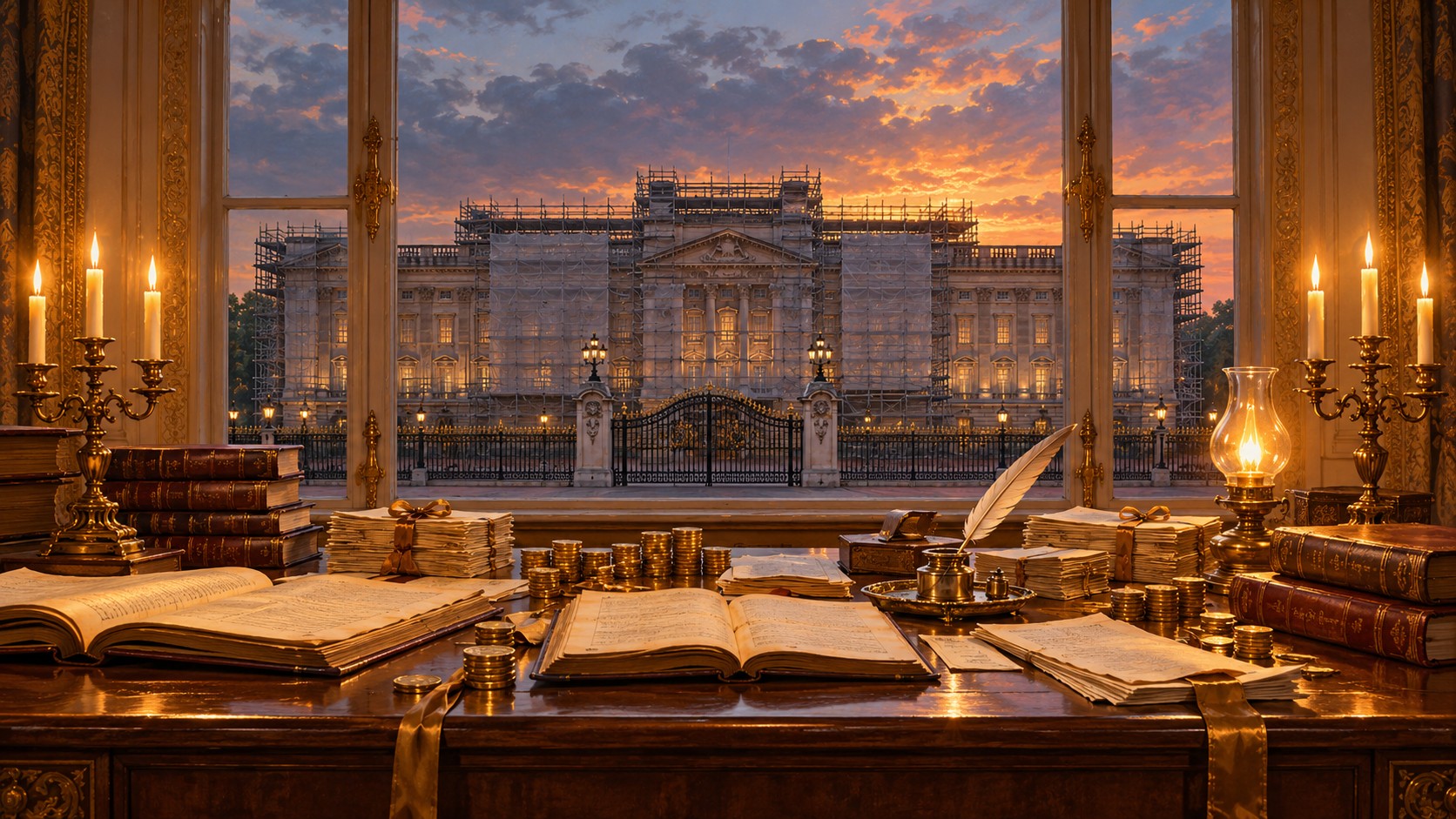
In June, the Royal Trustees announced that the Sovereign Grant would fall from about £138 million this year to £99.9 million in 2027/28. [1] Good news, you’d think. But read a bit further into the same report and you quickly realise it isn’t what it seems. Take out the temporary money for refurbishing Buckingham Palace, and the funding for running the Royal Household goes from about £52 million to nearly £100 million. That’s almost double.
How do you cut something and double it at the same time? Well, you simply change the rules. And that’s what this article is about, how the public money is worked out, who makes the decisions, and how much of the bill we never actually get to see.
Who Decides
Three people, known as the Royal Trustees, apply the formula that sets the Grant’s annual value. The first two are the Prime Minister and the Chancellor, as you’d expect. The third is the Keeper of the Privy Purse, the official who runs the King’s own finances. That surprised me, seeing as most of us would call it a conflict of interest, but there you are. The law puts him there, and Parliament sets the rules that govern the sum. [2]
There’s no annual vote and no haggling over a number. The Sovereign Grant is a share of what the Crown Estate pays to the Treasury, and the Crown Estate manages enormous swathes of land and property. [3]
The Crown Estate includes the seabed. Under old English law, anything nobody else could prove they owned automatically belonged to the Crown, and that includes the bottom of the sea for 12 nautical miles around England, Wales and Northern Ireland. Scotland, fortunately, managed to haggle its way out. Since 2017 its seabed has been run by Crown Estate Scotland, and the money goes to the Scottish Government instead. [4] (Whether that makes it the King’s is one of the three claims I test further down.)
There’s also one annoying little rule that works very nicely for the Crown. The Grant can’t fall below the previous year’s amount, so it can only go one way. The one exception is if its reserve fund grows too large. Otherwise, the only way to bring it down is for Parliament to pass a new law. [1]
The Windfall
A few years ago, offshore wind developers started paying huge fees to reserve patches of seabed for future wind farms, and the Crown Estate’s profits surged to more than £1 billion a year. [5] Left alone, the formula would have handed the monarchy an absolute fortune. So in 2023 the share was cut from 25% to 12%. [3] Even then, the Grant rose from about £86 million to nearly £138 million in two years, an increase of about 60%. [6] [3]
Then the wind fees started to tail off as projects moved into construction, so profits dipped. At the same time, the Crown Estate was allowed to keep far more of its income back for investment, 60% instead of 27%. The amount it handed to the Treasury fell from about £1.15 billion to £487 million, a drop of well over half. [5]
Under the old 12%, the Grant would have fallen to about £58 million. But the rule says it can’t fall without a new law. So the Government brought one in, and the Royal Trustees recommended raising the share to 20.5%. That gives a Grant of £99.9 million, about £42 million more than the old formula would have produced. [1] Strictly speaking, it was Parliament that changed the rules, not the Palace. But one of the three people who recommended the change was the King’s own finance official. Make of that what you will.
So back to that cut from the start. This year’s £138 million includes £40.3 million for the Buckingham Palace refurbishment, money that won’t be needed once the work is finished. What’s left for actually running the Household is £99.9 million, up from £51.8 million in 2024/25. That’s an increase of about 93% in three years. [1] Nice work if you can get it!
The Trustees say the Household needs that money once the refurbishment finishes. That may be so, but for the rest of us, when income halves, we’re told to cut back. The Crown got a bigger slice instead.

Parliament completed the Sovereign Grant Bill’s stages on 14 October 2026, and it has since received Royal Assent. So the last bar in the chart is no longer a proposal. The £99.9 million for 2027/28 is now set in law. [7]
What It Costs You
Now, before someone jumps up to inform me the King doesn’t receive that money personally, I already know. The Grant pays for the King’s official life, not his personal spending. It’s still public money, though, and we’ve every right to scrutinise it.
Spread across the entire UK population of nearly 70 million, this year’s Grant comes to about £2 a head, or about £3.40 for each income taxpayer. [8] [9] You won’t find it on your annual tax summary, though. There’s no monarchy line on your payslip; it comes out of general government revenue like everything else. It’s hardly a life-changing sum of money.
But the Grant is only the part of the bill we’re actually shown. There’s a large chunk of change that never makes the headlines.
The Hidden Ledger of the Crown
The Royal Household publishes what it spends from the Grant, so that part can be checked line by line. The rest is spread across other public bodies, or not published at all. Half the lines below have no figure.
| Category | Latest figure | What it tells us |
|---|---|---|
| Sovereign Grant, 2026/27 | £137.9m [3] | Public funding approved for this year |
| Property upkeep, including staff, 2025/26 | £67.5m [10] | Includes spending on the Buckingham Palace refurbishment; paid for out of the Grant, not on top of it |
| Royal security and protection | Not disclosed [11] | No official annual cost is published |
| Other government and council costs | No complete total [11] | Spread across different public bodies |
| Tax arrangements | No single figure | Depends on what you compare against; Part Three covers the King’s tax |
| Crown Estate payment to the Treasury, 2025/26 | £487m [5] | Profit returned to public finances, and the figure that sets the 2027/28 Grant. Not a monarchy cost |
These figures measure different things -- funding, spending, undisclosed costs and revenue -- so they can’t be added together.
So what does the monarchy really cost?
Honestly, nobody can say for sure from the published figures.
The Government won’t release the cost of royal protection, saying it could compromise security. [11] Police forces and councils also pick up costs, but there’s no published total that brings them all together. To get anywhere near a full figure you have to piece together records from the Royal Household, the Treasury, Parliament, the police and local authorities. Even then, there are still gaps. When we’re told public services must be cut to save money, I think we have every right to know what all this adds up to.
In 2024, the anti-monarchy campaign group Republic put the annual cost at £510.4 million, which works out at about £7 a head. [12] Its estimate included £150 million for security and £32 million for local council costs, an older number adjusted for inflation. The rest is income it reckons the country could earn if royal buildings and estates were run differently, which is really an argument for changing the system rather than a cost of the current one. But it still gets closer to a full picture than the official figures do.
Some people will look at £2 a head and decide the monarchy is good value. Others will ask why a hereditary office gets public funding on this scale at all. Either view is fair, as long as it rests on the whole picture, and right now there are costs we can verify, costs we can only estimate, and costs the Government won’t disclose. A few pounds a year sounds like a bargain, but you wouldn’t sign off any other bill with half the lines left blank.
Putting Royal Claims to the Test
Back to those three lines from the start.
Claim One: Tourism pays for the monarchy
Royal history clearly brings tourists to Britain. People queue for Buckingham Palace, Windsor Castle and the Tower of London. But are they coming to see the King, or a thousand years of history? Those aren’t the same thing, and visitor numbers alone can’t tell them apart.
Versailles is a useful comparison here. France got rid of its monarchy a long time ago, yet in 2025 the Versailles estate recorded 8.4 million visits. [13] Apparently, people are still interested in royal palaces even when nobody royal actually lives in them. That doesn’t prove Britain would keep every visitor without a sitting monarch, but it does undercut the idea that palaces need a resident royal family to draw a crowd.
A study published in March 2026 looked directly at whether royal events brought more overseas visitors to Britain. [14] The researchers examined tourist figures from 1995 to 2022 and tested ten major royal events. They found no statistically significant boost, meaning no clear increase they could reliably put down to those events. [14] Exchange rates and global incomes did far more to explain visitor numbers than the pomp and ceremony did.
Tourist money does flow into the royal sites, through the charity Historic Royal Palaces and the Royal Collection Trust, and some of it helps cover the Household’s official costs. [15] [16] [17] But to show the monarchy brings in more than it costs, you’d need to know how much tourism exists only because Britain has a reigning monarch, what that’s worth, and how it compares with the complete public bill. Until someone produces that calculation, “they pay for themselves” is a slogan, not a sum.
Claim Two: The Crown Estate belongs to the King
This one trips a lot of people up, and honestly, it’s easy to see why. The King holds the Crown Estate’s land, buildings and seabed in right of the Crown, which sounds an awful lot like owning it. It isn’t. Charles can’t sell the Estate, pocket the money and buy himself a private island. It’s run independently under legislation, and none of it is his private property. [18]
Royalists have an answer to that, and it goes back to 1760. That year George III handed the income from the Crown lands over to the government in exchange for the Civil List, a fixed yearly payment, and the deal has been renewed with every new reign since. [11] Seen that way, the Sovereign Grant is just a slice of the King’s own income coming back to him, and the Treasury does very nicely out of the rest, £487 million in 2025/26 alone. [5]
It’s a neat story. The trouble is, it assumes the land was the family’s to give away in the first place. Critics point out that the Crown lands came with the job, not the bloodline, and for centuries their income paid for running the country. On that reading, George III didn’t hand over his inheritance in 1760. He handed over the cost of running the state, along with the income that had always paid for it.
That old deal is why the Crown Estate’s money still sets the size of the Grant, and why the King’s own finance official still has a hand in working it out. Which leaves a question I can’t shake. If the Crown Estate isn’t the King’s to sell, why does it get to decide how much of our money goes on his official duties?
Claim Three: They work hard for their money
On the numbers, some of them clearly do. A tally based on the Court Circular, published in January 2026, counted 532 engagements for King Charles in 2025 and 478 for Princess Anne. [19] Royal duties cover diplomatic work, meetings, charity visits and ceremonial events, and some of it involves preparation that a count of appearances never captures.
The trouble is that an engagement is a loose unit. A short visit counts as one, and so does a full day of diplomatic duties, so the totals can’t tell us how many hours anyone worked or what the public got out of it. And let’s be honest about what “hard work” looks like here. A royal engagement usually starts with a chauffeur-driven car and ends with one. In between, there’s a ribbon, a handshake, a plaque and a cup of tea somebody else made. Go abroad and you get the red carpet, the state banquet and a team making sure nothing so much as creases. Then it’s home to a household of staff, paid for out of the Grant. Nobody’s doing a big shop after a twelve-hour shift or wondering how to cover the gas bill. Hard work is a nurse on nights. Cutting ribbons, however many times you do it, is not hard work.
And none of it is paid as a wage anyway. The Grant isn’t a salary, and the King and the Prince of Wales get their own income on top, from the Duchies of Lancaster and Cornwall, and it’s substantial. [20] So the question isn’t really whether they work hard. It’s whether the work justifies the money and privileges that come with a hereditary office, and whether being born into one family should bring financial arrangements nobody else can get.
Where That Leaves Us
Each of the three claims has a sliver of truth in it, I’ll give them that. Royal heritage does attract visitors, the Crown Estate does hand large sums to the Treasury every year, and senior royals do carry out official duties. None of that gives us the complete public bill, and none of it settles whether Britain’s arrangements are the right ones. That’s a separate argument, and people should be able to have it without being told they’re attacking British history.
And here’s the thing. Everything in this piece, the Grant, the formula, the hidden ledger, is the small change. It’s the bit of royal money we’re allowed to see. Before a single penny of it is counted, the King and his heir already have estates, investments and income on a scale most of us could only dream of, and none of it was earned. It came with the surname.
So if £2 a head is the bit they actually admit to, I think it’s time we looked at the wealth they’re sitting on. And that’s where Part Two begins.